
A Kerala taxi fare can look simple at first, then grow once tolls, parking and the driver's allowance are added. Knowing how the fare is built helps you plan a budget and compare quotes fairly. This guide explains each part of a taxi fare in Kerala, from kilometres included to driver bata, tolls, permits and GST. It also shows how kilometres are counted, how to read a duty slip and what to ask before you book.
Key Takeaways
- A Kerala taxi fare is built from a daily or package rate, kilometres included, extra km, driver bata and extras such as tolls, parking, permits and GST.
- Bellcabs counts kilometres from garage to garage, so the drive to your pickup point counts too.
- Compare quotes line by line. A Kerala taxi package with driver bata included can look cheaper than one that adds it later.
The Parts of a Kerala Taxi Fare
Most operators build a Kerala taxi fare from the same building blocks. The names vary a little, but the logic is the same. Once you know the parts, a quote becomes easy to read.
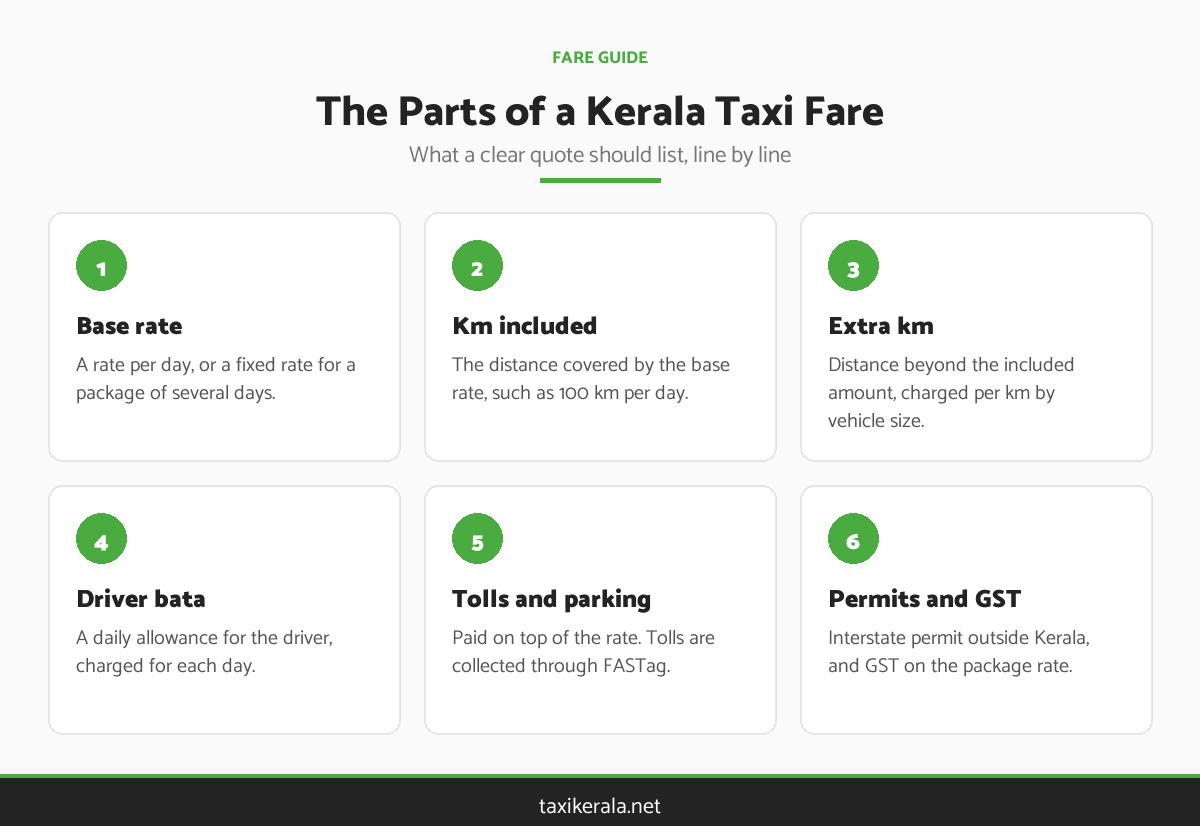
- Base rate: a rate per day, or a fixed rate for a package of several days.
- Kilometres included: the distance covered by the base rate. On the Bellcabs taxi page, each day includes 100 km.
- Extra kilometres: distance beyond the included amount, charged per km. The rate rises with the size of the vehicle.
- Driver allowance, or driver bata: a daily amount for the driver, charged for each day of hire.
- Extras: tolls, parking, state taxes, interstate permit charges and GST.
The vehicle sets most of the cost. A sedan has the lowest daily and per km rates. Six and seven seat vehicles cost more. Tempo travellers and tourist buses cost more again. The Bellcabs taxi page lists the rates per day, the kilometres included, the extra km rate and the driver allowance for each vehicle.
Check the date on any rate card you use, because an old Kerala taxi fare table may not match today's rates. The rate card on the taxi page is labelled as an approved tariff from 2021. Taxi fares in Kerala change over time, so always ask for a current quote for your dates.
Per Day Hire or a Package: How Kilometres Work
There are two common ways to pay for a Kerala tour by taxi. Each suits a different kind of trip.
Per day hire charges a daily rate with a set distance included, such as 100 km a day. It suits short trips, city days and plans that may change. If you drive less, you still pay the daily rate. If you drive more, extra km are added.
A package charges a fixed rate for a set number of days and kilometres. The Bellcabs tour packages run from 2 nights with 300 km to 9 nights with 1,000 km. Packages suit planned routes, such as Munnar, Thekkady and Alleppey.
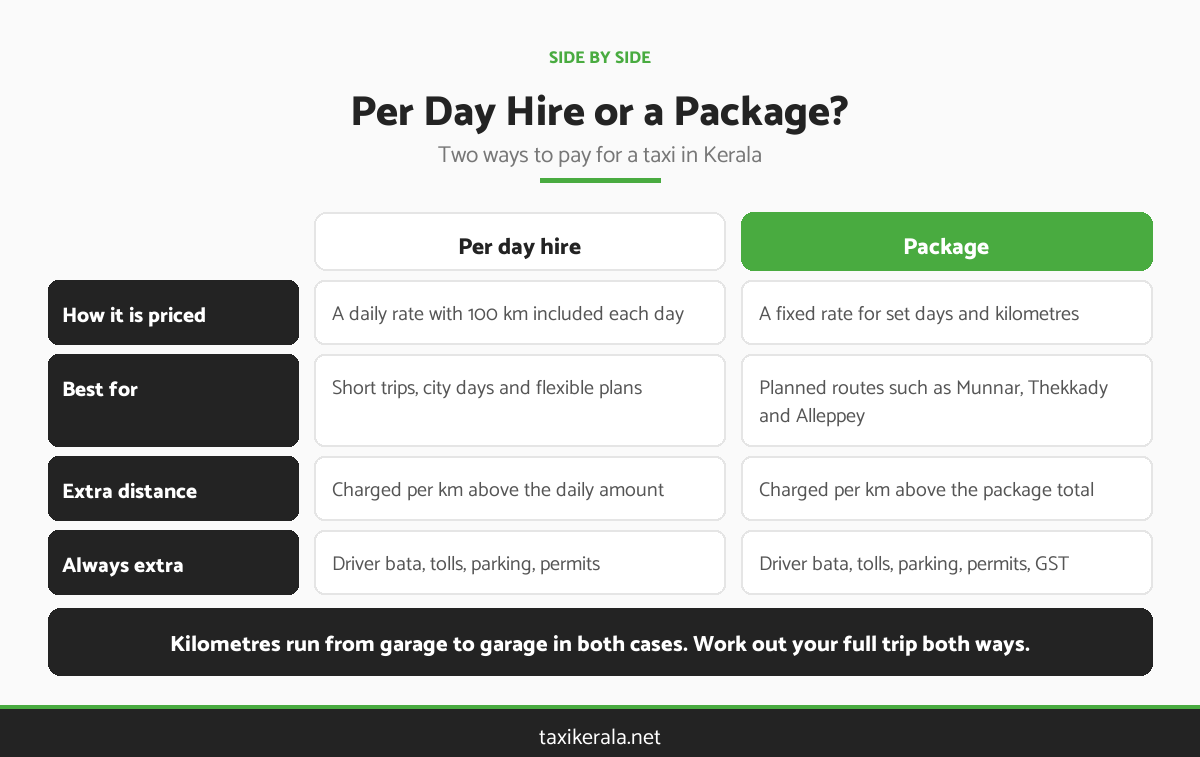
One rule applies to both. Bellcabs states that kilometres are charged from garage to garage. For its packages, the count starts and ends at the Cochin garage. That means the drive from the garage to your hotel, and back at the end, is part of the total.
This matters most for short trips. If your pickup is some distance from the garage, those kilometres use part of your allowance. Ask where the garage is and how far it is from your pickup point when you request a Kerala taxi fare.
Extras: Driver Bata, Tolls, Parking, Permits and GST
Extras are where most surprises come from. A clear quote lists each one, says whether it is fixed or estimated and explains how it will be settled.
Driver bata is a daily allowance for the driver. The package notes list it as an additional charge per day. On a five day tour, it is charged five times. When you compare a Kerala taxi package with driver bata included against one without, add it back before comparing totals.
Tolls are collected electronically on national highways through FASTag, which is managed by IHMCL. Toll and parking charges are paid on top of the quoted rate. Bellcabs also lists state taxes as an extra.
Interstate permit charges apply when the route leaves Kerala. Trips to Kanyakumari, Tamil Nadu or Bangalore need one. Vehicle permits in India are issued through the transport department, and many services are online on Parivahan.
GST is added to the package rate, as the package notes state. Finally, rates may change during festive and peak season days, so the same trip can cost more in holiday weeks.
Fuel is part of the rate, but if you pay for fuel during the trip, Bellcabs treats it as an advance and adjusts it in the final bill. Keep the receipts, along with any toll and parking slips, so the final bill is easy to check at the end of the trip.
A Worked Example: Building the Fare for a Four Night Tour
Numbers change with the vehicle and the season, so this example uses the parts of the fare rather than prices. Imagine a family of six booking the four night Munnar, Thekkady and Alleppey package in an Innova.
- Start with the package rate for the Innova on the four night route, which includes 500 km.
- Add any extra kilometres. If the closing reading shows 560 km, the extra 60 km are charged at the Innova's per km rate.
- Add driver bata for each of the five days.
- Add tolls, parking and any state taxes paid during the trip.
- Add GST on the package rate.
That total is the real Kerala taxi fare for the trip. It is often higher than the package rate alone, which is why the extras matter. Ask the operator to fill in each line for your dates before you book.
Small choices change the total. A detour to an extra viewpoint adds kilometres. A hotel far from the main road adds kilometres each day. Planning stops in a sensible order keeps the taxi fare in Kerala close to the estimate.
Reading the Duty Slip and Comparing Quotes
The duty slip is the record of your trip. It shows the starting and closing kilometre readings, which decide the extra km charge.
- Before you set off, check the starting km reading on the duty slip.
- At the end, make sure the driver enters the closing km reading correctly.
- Sign the slip when you hand back the vehicle and settle the bill.
- Write any comments about the service on the back of the slip.
Bellcabs also sends an SMS with the duty confirmation. It includes the car registration number, the driver's name and mobile number, and the starting km. Compare that number with the slip.
To compare two quotes for the same trip, line them up item by item. Check the vehicle, the days, the kilometres included and the extra km rate. Then list the driver bata, tolls, parking, permits and GST. A lower daily rate with fewer included kilometres can cost more on a long route.
Finally, ask a few direct questions. How are local sightseeing kilometres counted? Is the driver's overnight stay covered? Which extras are estimated, and which are fixed? Clear answers at the start make the final Kerala taxi fare easy to check.
When you are ready, ask for a Kerala taxi fare quote through the Bellcabs contact page with your dates, route, group size and pickup point.
Plan Your Trip with BellCabs
A Kerala taxi fare is easier to understand once you see its parts. Start with the daily or package rate and the kilometres included. Then add extra km, driver bata, tolls, parking, permits and GST. Remember that kilometres run from garage to garage, and check the duty slip at both ends. Compare quotes line by line, not by the headline number. To get a current Kerala taxi fare for your route, dates and group, contact Bellcabs Kerala.
Frequently Asked Questions
How is a Kerala taxi fare calculated?
Most fares combine a daily or package rate, a set number of kilometres, an extra km rate, a daily driver allowance and extras. Extras usually include tolls, parking, interstate permits and GST on the package rate.
What is driver bata?
Driver bata is a daily allowance paid for the driver during the hire. It is usually charged for each day of the trip. Check whether a quote includes it, because it changes the total on longer tours.
How many kilometres are included per day?
On the Bellcabs taxi page, each day of hire includes 100 km. Packages include a set total, from 300 km for 2 nights to 1,000 km for 9 nights. Extra distance is charged per km.
Are tolls and parking included in the fare?
Usually not. Bellcabs lists tolls, parking and state taxes as charges on top of the quoted rate. Keep receipts if you pay any of these yourself, so they can be checked in the final bill.
Why do kilometres start from the garage?
Bellcabs counts kilometres from garage to garage, so the drive to your pickup point and back is part of the trip. Ask how far the garage is from your hotel when comparing quotes.
Do I pay extra for a trip to Kanyakumari?
Yes. Kanyakumari is in Tamil Nadu, so the trip needs an interstate permit. The permit charge is added to the fare. Ask for it to be shown as a separate line in your quote.
Do taxi fares in Kerala change in peak season?
They can. The Bellcabs package notes say rates are subject to change during festive and peak season days. Book early for holiday weeks and confirm the final rate in writing before you travel.
Is a per day rate or a package cheaper?
It depends on your route. Packages suit planned multi day tours with known distances. Per day hire suits short or flexible trips. Work out the full cost of your own plan both ways before deciding.
How can I check the operator before I book?
Read the operator's terms, check how kilometres are counted and ask how it confirms bookings. You can learn more about Bellcabs Kerala, or see its fleet and packages on the Bellcabs home page.
